
Established 1996
Tourism
Instagram Tourists: Netherlands faces the Selfie Rage
A new breed of tourists known as the Instagram Tourists have become a rage in several parts of the world. The moment any spot- on earth becomes famous in the said social media platform, it doesn’t take long before the place gets flooded by these tourists. Destinations tend to leverage such photographers as this is an organic and inexpensive digital marketing method. The Netherlands is the latest country to be swarmed by these travelers, in search of the tulip fields. Unfortunately, while photographing such spots, they often trample upon these fields, destroying the flowers themselves. This is another example of how mass tourism can cause a lot of harm to destinations all over.
Source:https://www.tourism-review.com/instagram-tourists-destroy-tulip-fields-news11039
Uploaded Date:20 May 2019
Experts: Spain needs to focus on Tourism Planning
Mass tourism can never be a bad thing, in revenue terms at least. In Spain, tourism accounts for more than a tenth of the country’s GDP. Yet criticism is mounting for tourism, especially in some cities such as Barcelona which are seeing massive anti-tourist movements. This is primarily due to faulty planning on the part of the authorities, rather than tourism itself. The greatest opposition is due to the rises in prices of common commodities as a result of tourists’ higher purchasing power. But Barcelona will be well-advised to heed to Paris’s case. The latter receives more tourists each year than the former but stays clear of any such criticism. Business intelligence received suggests that Paris actually attracts a whopping eighteen million tourists each year. But due to the city’s superior planning and management, there are no palpable tensions with the local communities.Source:
https://www.tourism-review.com/tourism-planning-needs-to-be-developed-in-spain-news10651
Uploaded Date:04 July 2018
Mediterranean Tourism expects 420 million Visitors by 2020
At the recent Mediterranean Resort and Hotel Real Estate Forum (MR&H), it was reported that the Mediterranean has cemented its position as the largest inbound tourism zone in the world. It accounts for approximately a third of international arrivals and roughly similar a share of the revenues. The report further states that total tourist arrivals are set to exceed the 420 million people mark by the year 2020. Tourism consulting done by the WTO (World Tourism Organization) states that till 2030, an annual 3.3% growth rate is to be exceeded setting the bar at a staggering 1.8 billion visitors by 2030. The numbers on the European side have been boosted by the geo-political frictions and fears of terrorism in the southern part of the Mediterranean where tourism accounts for 12 and 11 percent of GDP and workforce respectively. Spain has fortified itself as the most mature market on the European side aided by its strong digital marketing. This has enabled Spain and the broader region to market to niche segments depending on their choices. The region further needs to understand concepts such as new luxury and crowdfunding to further steal a march.
Source:https://www.tourism-review.com/mediterranean-tourism-steadily-growing-news10338
Uploaded Date:27 October 2017
Crafting a new Market: Scotland highlights opportunities for Craft Beer and Tourism
Scotland has always been renowned for its whiskies but now the Visit Scotland campaign seeks to leverage this for tourism purposed by twinning it with craft beers and salmon. This segment alone has the potential to generate revenues worth £900 million annually as per a tourism consulting report submitted by Visit Scotland. It has also been found out that around ninety three-percent of total visitors spend time in dining out. Also a fifth of all tourism expenditures are engaged in eating out or drinking. The main interest in Scottish craft beers comes from Norway, Sweden, Denmark and Finland, plus some from USA, Germany, Switzerland, Italy, Spain and China. The craft brewery revolution also aims at tapping local landmarks, heritage and scenery which is a great hit among connoisseurs of provenance and authenticity.
Source:http://www.beveragedaily.com/Markets/Spirit-of-Scotland-craft-beer-and-tourism
Uploaded Date:27/06/2017
WTTC Report shows Travel and Tourism supports 108 million jobs, 10.2% of global GDP
The World Travel and Tourism Council (WTTC) recently released its 2017 Benchmarking Report on the state of health of the industry. Some interesting finds emerge. One such is that tourism jobs are twice as numerous as finance ones and five times more than those in chemical manufacturing. The contribution to global GDP is a little more than a tenth of the total. This is far more than banking, mining, agriculture, chemicals and automotive manufacturing. The total GDP of the sector amounts to in excess of seven and a half trillion US dollars. The growth rate for the next decade has been projected at four percent per annum. This growth is expected to be distributed equitably across the major regions such as Africa, the Americas, Asia-Pacific, Europe and the Middle East.
Uploaded Date:27/06/2017
Responsible Tourism: 3 Hours from Bangalore
Barely 3 hours’ driving distance away from the bustling metropolis of Bangalore, lies a small town called Malavalli which has created quite a niche for itself in the area of responsible tourism. While the area and the larger Mandya district within which it lies, may not be able to compete with the nearby areas of Karnataka in terms of flora and fauna, it more than makes up for it through a highly innovative approach. The nearby areas of southern Karnataka including Kabini in Mysore district and Coorg are renowned worldwide for their rich and diverse forest cover. Some of Asia’s largest herds of elephants roam these lands along with tigers, leopards, deer, wild boar and varieties of birds. Mandya has little of those yet remains a fixture among all travelers going on wildlife pilgrimages to southern India. We will see how that has been executed and that too in a manner that can be termed as responsible tourism.
The Kaveririver though not perennial like the northern Indian snow fed rivers, has a special place in the state of Karnataka. Agriculture and human settlements are substantially dependent on her. The river criss-crosses the Mandya district and in fact reaches peak levels of water carrying capacity during the winter months when this part of the country receives significant rainfall. The giant Mahseer (Tor khudree) fish finds itself at home in these waters and has emerged as the star attraction for pulling people here. Wildlife enthusiasts and adventure sports freaks converge to this town of Malavalli for camping next to the Kaveri river in search of the Mahseer. The sport of angling or game fishing is especially popular. To facilitate the smooth conduct of these angling operations, the government of Karnataka undertaking- Jungle Lodges & Resorts (JLR- http://www.junglelodges.com/) – has adopted a unique approach. This approach emerged out of a shortage of proper fishing guides as well as problems of poaching prevalent in this area.
In the year 1987, a precedent was set with the establishment of the Kaveri Wildlife Sanctuary. A substantial portion of this protected area was to lie within the borders of the Mandya district. Due to the Kaveri’s central role in the life of the district, fishing was a very important way of life. Fishermen had been plying their trade on these waters for hundreds, perhaps thousands of years. Now overnight due to the establishment of the sanctuary, thousands of families got uprooted and their livelihood was under threat of being wiped out. Resentment further grew due to the fact that fishermen who were plying their trade along the Kaveri outside the borders of the seemingly arbitrary confines of the wildlife sanctuary faced no such threat. Thus those living in the vicinity of the sanctuary felt trapped. This is when they resorted to poaching. In fact some of them were not poachers in the traditional sense but were simply fishing as they had been for generations, but overnight the tag of ‘poacher’ came to be associated with them. However, due to the stakes being so high, illegal fishing continued leading to even the other forms of poaching as these fishermen had complete information of the area and had now turned rebellious. This is where JLR and the government’s tourism wing came to the rescue of the forest as well as the people. JLR inducted these poachers into their training modules for fishing guides. These ‘poachers’ were all locals and thus had intimate knowledge of the forest, fishing and spotting of the mahseer. This induction and subsequent employment ensured they had regular government backed salaries. In addition, fishing guides made handsome returns in the form of tips from tourists. Foreigners flocked to this area in search of the mahseer and when these guides helped them spot these elusive creatures, tips of upward US$ 100 proved not uncommon.
Thus in this way, the government of Karnataka not only solved the problem of expert fishing guides’ shortage, they helped dozens of families re-establish their livelihoods wiped out due to a well-intentioned national government initiative. The example of JLR was then replicated across resorts in the fishing area. Number of private players joined in this initiative resulting in near absolute decrease in poaching incidents.
Skyline is the leading specialist from India, offering travel and tourism marketing and consultancy.
By- Aritro Dasgupta
Patra-A rose red city half as old as time
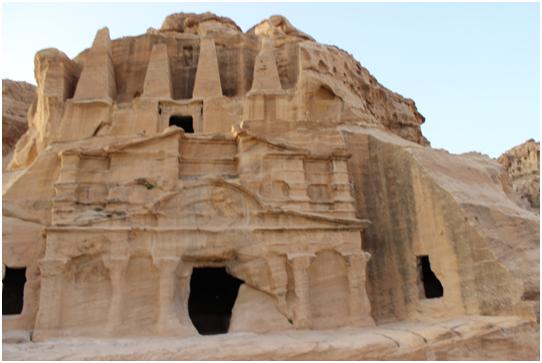
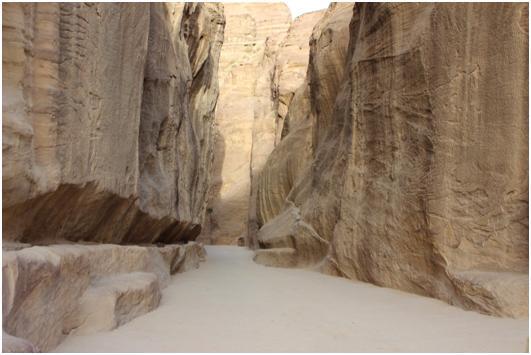
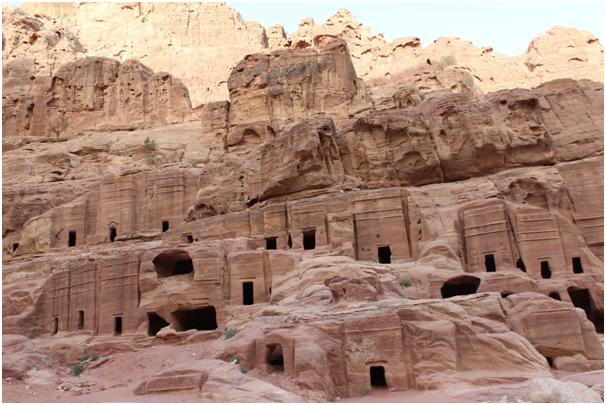
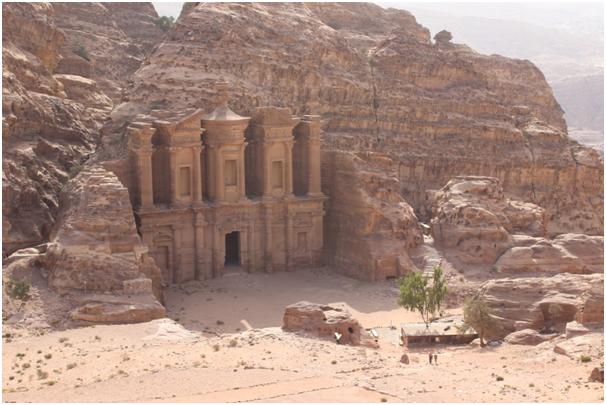
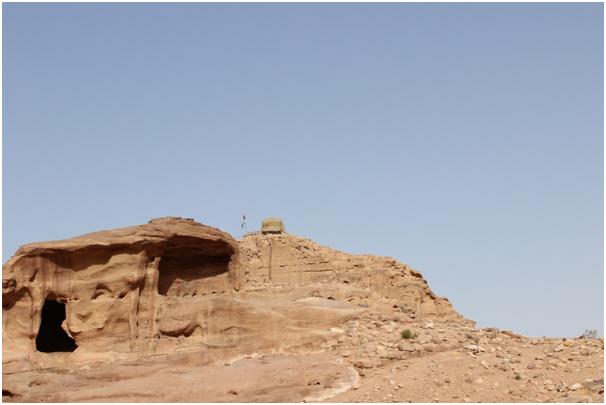
Jordan is must visit destination for a Globe Trotter. The country has Dead Sea which is the lowest point of the world, Jerash which is the best roman architecture outside Italy, Wadi Rum also known as the valley of moon and the wonder of the world – Petra. The country has a lot to contribute to the tourism sector.
Visiting the Seven Wonders of the World was always in my bucket list and so did I plan the trip to Jordan. The country doesn’t have good public transport and hiring a car is expensive but the only option when we have to travel the country in limited time. This was also one of the few countries including Egypt where you will find a lot of frauds near tourist destinations so one has to be careful.
Petra is also known as “Rose-Red City half as old as time”. The entry fee is expensive specially form a weak currency like ours. One must be mentally prepared to walk a lot or take a donkey ride. The vehicles are not allowed in Petra so only option is a donkey/horse ride if you are not willing to walk much.
The city of Petra took us way back into olden time and the city was like a hidden treasure or lost kingdom. The food and drinks inside the monument is very expensive.
Walking in Petra gave me a feeling, like I was walking in wonder land and exploring the lost kingdom. Each monument of the city was different and unique.
About Myself –
A passionate traveller, Visited 41 countries across all 7 continents and 6 wonders of world on vacation trips in 3 Yrs. The World Tour Continues…
Sujoy Kumar Mitra